The Modern World

Aircraft

“I WANT TO FLY"


– A thought that every man who has seen a bird in flight has thought of, wherever in the world they may be.
  • Since ancient times, the desire to fly along or above the birds has been excruciating for a few, so much that it compelled them to take it up as their passion and act upon it. Amongst several records we find mentions of individuals who attempted to imitate these birds by flapping their hands after jumping off cliffs or structures. The lesson learned was expensive as many lost their lives or were disabled for life.
  • As a result, people concluded that this wasn’t the way to go about it and these suicidal attempts were discontinued; leaving the urge unsatisfied. To this, the only solution left to humans was to relieve their mind of these thoughts of flight. So they drew on walls of their abodes and wrote tales of flying men in the hope that this would drain them of their impossible desires.
  • Instead, these expressions further aggravated the ardour to fly; setting them on a path defined to fulfil the passion for flight. The path was long and painstaking but after years of observations humans learned a few fundamentals of flight.
  • They found that the structure of birds highly differed from that of humans. That their bones were hollow and light and their skin was covered with soft weightless feathers. The people who learnt this first, and made something of it were the Chinese.
The Chinese Finesse

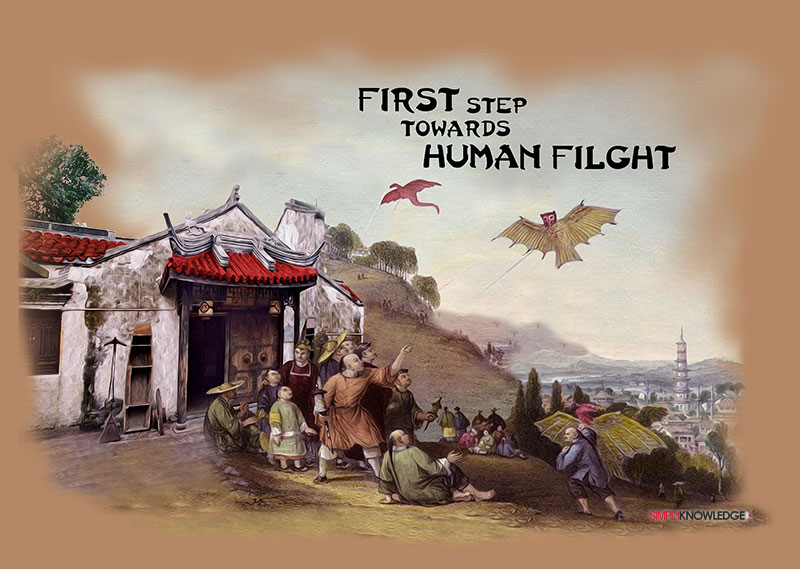
  • Chinese scholars analyzed available information and concluded that any flying object must be light-weight, sturdy as well as buoyant. As these men were from before 400 BC, their inventory was limited to naturally available objects, hence leaving them little choice of materials.
  • One of these available materials was Bamboo. They found that bamboos were most similar to bird’s bones as they were sturdy yet hollow. Hence bamboos were ideal to build the skeletal structure of their prospective flying object.
  • The next step was to give the structure buoyancy, meaning - make it float on air. They must have experimented with several materials before they used a silk cloth. As they attached the silk cloth to the bamboo frame they found that the combination met the aforementioned requirements and as a result… It FLEW!
  • These flying objects are well known to us as KITES. This was a great achievement for mankind and was the first step towards human flight. It was the first instance where in a man-made object had flown in the sky.
  • Ancient books of records written & maintained during several dynasties mention that these kites were large in size and rectangular in shape. The kites are said to be used as a recreational sport later in time.
  • The Chinese flew these kites on occasions and for omens as it captivated the minds of illiterate crowds. The invention spread across the Asian continent and several myths originated around and about the use of kite, ones which are not quite worth mentioning here.
Enhanced Experiments

  • Indifferent from these tales, the scholars continued their experiments with these kites. Kites became cheaper as silk was replaced by paper after 100BC. Paper was lighter than cloth and fairly displayed silk’s buoyancy.
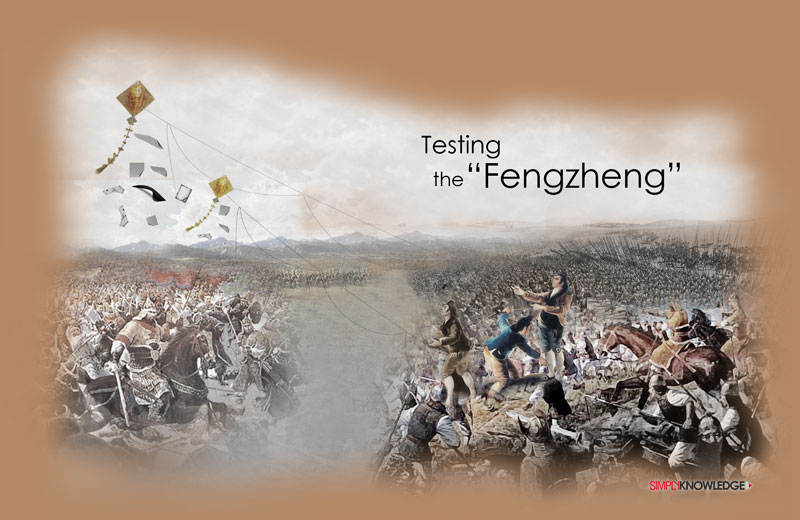
  • Later on, Kites were stringed with silk threads and bamboo tubes. It produced varied sounds while in flight as the wind gushed through it, giving these kites the name “Fengzheng” (wind string instrument).
  • But was it the only reason? There is also mention of leaflets being showered down on enemy troops to spread propaganda using these Kites.
  • These ideas could have been a way to test the carrying capacity of this flying structure. With success in flying these accessories along with the main frame, these inventors were assured that principally their invention was sound.
  • Over a period of time, efforts were made by succeeding generations to create a kite with such attributes that it could achieve the ever persistent dream of humans flying. The research was supported by the military of the time as they found this invention quite useful during warfare. Having progressed so far, would it be fair to rule out the possibility mentioned in the ancient book ‘Records of Strange Events (Du Yi Zhi)’?
  • The book mentions an instance where Emperor Wu Di (464-549 AD) of the Liang Dynasty, attempted an escape from his castle as he was surrounded by his enemies. The only way left for him was to use the kite and fly into the nearby water body. They also mention that he could not escape as the ‘kite was brought down by the enemy’ which means that the kite flew – along with the emperor?
  • This instance does not clearly state that humans could fly using kites unlike several others which articulate the use of these kites for military purpose.  But the question arises that if there was such a technology that enabled flight – Why was it limited to these Asian kingdoms?
From East to West


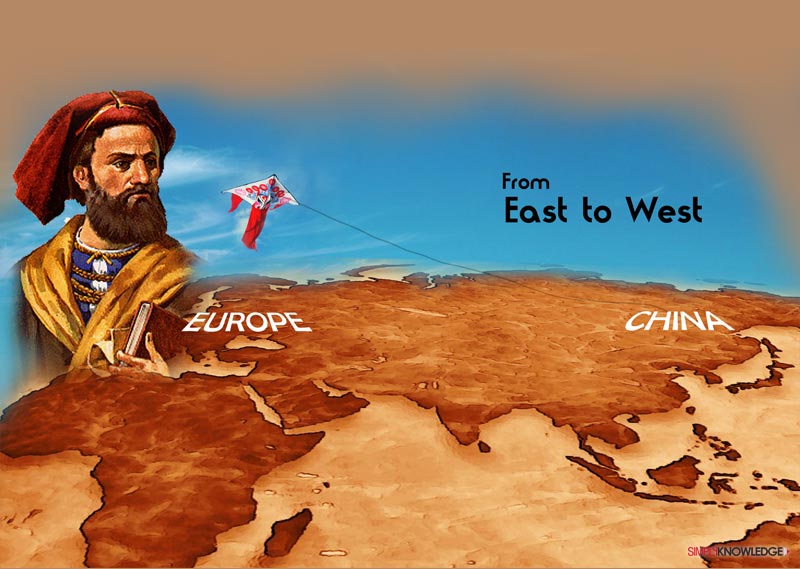
  • It wasn’t. Sometime during the late 13th century AD, a European merchant-cum-explorer Marco Polo witnessed these kites while he was travelling along with his father and uncle on Chinese terrain. The men recorded their experiences in a book called “Il Milione” in which they mention a detailed description of the Chinese flying objects. Apart from the book, on return to Venice in 1269, Marco Polo dictated his travelogue to fellow mates.
  • Although the Romans had used wind socks as flags previously, Marco is said to be the link that introduced the amazing flying object from the east to the west. But the impact was not quite productive since these were just tales for them.
  • During the Exploration era, the Japanese and Malaysian sailors brought actual kites and their uses to the notice of Europeans. Somewhere during the 16th century kites were used for fishing in a way much similar to that of seabirds. The fishermen used spider cobwebs as bait and suspended them from kites which they would fly above the sea.
  • These applications were perhaps what inspired the 17th century intellectuals to reconsider their opinions about kites. The results are known to us all as the famous Benjamin Franklin proposed to use a kite to perform an experiment to prove that lightening is electricity.
  • So does this mean that all the subsequent developments in the field of flight are to be credited to the Chinese? Not quite.
Early European Efforts

  • The Europeans had been testing several possibilities that would enable man to reach the sky. But their approach was not exactly focused onto just flying; in fact it took the Europeans quite a long time to come up with the theories and laws of nature that the Chinese had already understood and applied.
  • For instance, in 350 BC a Greek polymath and philosopher named Aristotle gave the western school of thought several new chapters to develop. One of this was physics which relayed that air was also a substance and that air offered resistance to anything travelling through it.
  • This was followed by Archimedes’s principle in 250 BC that in spite of resistance, objects travel through air when sufficient force is applied to them. Probably based on these theories, a few conceptualized means of flying.
  • There are written records by an English cleric named Roger Bacon in the book ‘De Mirabili Potestate Artis et Naturae’ which contains a number of passages about hypothetical flying machines. The book is said to be of contentious date and origin but the content is undoubtedly a theoretical endeavour for human flight.
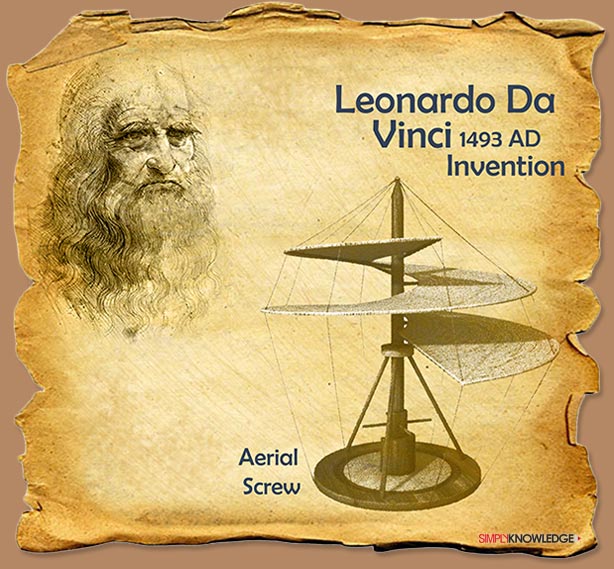
  • In contrast, the famous Leonardo da Vinci has drawn several sketches of practical flying machines circa 1493 AD. Leonardo is said to have observed birds and insects intently till he learned the factors that entitle them to fly. Based on those factors, he drew several sketches of machines that would fly like the birds or insects.
  • Leonardo first sketched a semi-practical machine in his ‘Codice Atlántico’ that could be described as an "aerial screw". He also mentioned about the hurdles he faced. For instance, when he made small flying models of the aerial screw he wrote that he could not stop the rotor from making the whole craft rotate.
  • Over the period of time, Leonardo conceptualized numerous machines on paper, but unfortunately he could not construct a single design.
  • Leonardo’s demise in 1519 was followed by a lull in the field of aeronautic development. Although his manuscripts travelled through many hands, no such implementations are noted or found.
Dawn of Aerodynamics


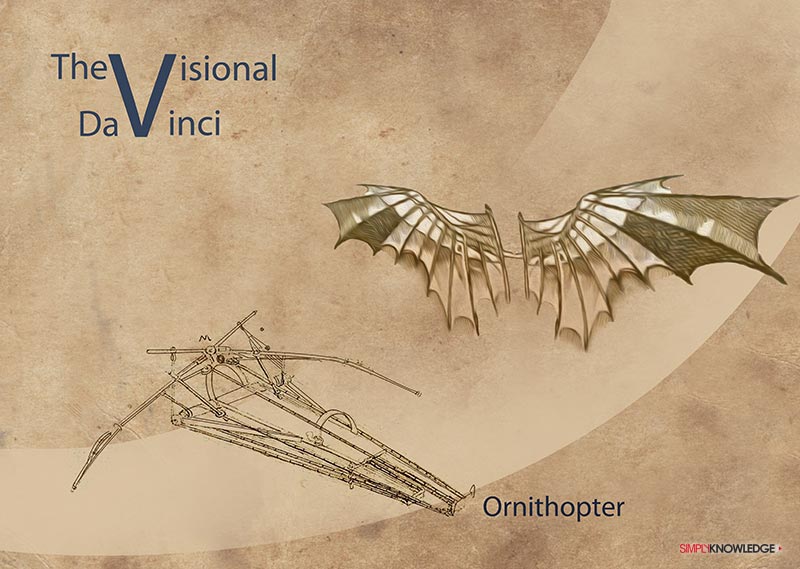
  • During his life time, Leonardo has made several contributions towards human understanding of the world around him. One that fits in piece here is his ‘Codex on the Flight of Birds’, wherein he notes that the centre of gravity and the centre of pressure could differ for a flying bird. He also describes the making of an ‘Ornithopter’ - a mechanical bird like structure with a human driver.
  • Leonardo’s treatise on aerodynamics was followed by Galileo’s ‘Two New Sciences’ - a book dated 1638, wherein he mentions the principles of inertia and momentum. Galileo also theorized that a body moving through air experiences an aerodynamic force – a resistance or “drag” that retards its motion.
  • These findings were further expanded upon, after Galileo’s death early in 1642, by a man born later that year; Isaac Newton. It was Newton who established these principles into laws of physics in his book ‘Principia’ published in 1687. He laid down three essential laws of motion, namely:

    »  The law of Inertia – An object at rest will remain at rest unless acted on by an unbalanced force. An object in
      motion continues in motion with the same speed and in the same direction unless acted upon by an
      unbalanced force.
    »  Acceleration is produced when a force acts on a mass. The greater the mass (of the object being accelerated)
      the greater the amount of force needed (to accelerate the object).
    »  For every action there is an equal and opposite re-action.

  • Newton’s laws laid the foundation of aerodynamics and narrowed the direction of experimenting for those who were anxious to fly.
Lighter-Than-Air

  • In the 18th century, European efforts were diverted by pressing problems and inventors shifted their focus from flying to driving. They eventually began producing experimental engines that could perform work.
  • As people mulled over earthly hurdles, a British philosopher and scientist made an outstanding discovery. Henry Cavendish discovered a part of air that he called “inflammable air” (known to us as Hydrogen) in 1766 AD.
  • Cavendish described in his paper – ‘On Factitious Airs’ that hydrogen transformed into water on combustion and that it was lighter than air. It is said that to prove this he had filled a balloon with the gas, which rose towards the ceiling once it was released.
  • This lighter than air substance was not known to the pioneering aeronauts until the French nobleman, Antoine Lavoisier named the gas hydrogen seventeen years later. It was only then that the gas was discovered and inspired Jacques Alexandre César Charles for the thought of a soaring balloon.
An Alternative Answer
  • In the meanwhile, a Frenchman named Joseph-Michel Montgolfier was sitting by a bonfire while reading an article about an impenetrable territory via sea or land. As his eyes shifted from the paper to the ashes and embers rising in the smoke of the fire, his mind had one of the most significant ideas.
  • Joseph-Michel thought that the smoke had a special kind of gas that had the property of levitation. He tested this theory by building a small box-like container out of thin wood covered from the top and sides with a light-weight cloth. To his delight, as soon as he lit a few crumples of paper under the container, it lifted off and rose up till the ceiling stopped it.
  • Soon Joseph and his brother were prepared to make a balloon large enough to reach sky high with a human passenger. After several permutations and combinations, what came about is popularly known as the Montgolfier balloon.
  • After initial tests with animals on board, the Montgolfiere-style hot air balloon named “globe aerostatique” took off with Jean-François Pilâtre de Rozier and Marquis d'Arlandes on 21st November, 1783.
  • The two took off in the exquisitely decorated 60,000-cubic foot (75 feet tall & 50 feet in diameter) balloon made of taffeta cloth, coated with a varnish of alum for fireproofing the cloth. The men travelled nine kilometres at a height of about 3,000 feet and landed safely after 25 minutes at Butte-aux-Cailles, Paris.
  • Thus mankind had figured out a way to reach the sky.
Balloonomania

  • Only 10 days after the Montgolfier success, the next to be noted in history were Jacques Alexandre César Charles and M. N. Robert as they became the first in the world to fly in a Hydrogen gas balloon.
  • Thereafter several took the concept of rising in a balloon using alternate fuels and the idea became common in the following years. Many augmentations were tested along with the balloon for an improved experience, some failed and some we read about today.
  • While the Balloonists had achieved a remarkable feat, in 1784, Christian de Launoy and his mechanic Bienvenu demonstrated a new kind of toy to the French Academy of Sciences.  The toy was a precursor of a simple helicopter.
  • But the idea did not click and the French continued floating onto new endeavours. An unspoken challenge was set; a natural hurdle was to be overcome. After his first flight, Jean-François Rozier made several attempts to cross the English Channel but due to certain technical reasons he couldn’t.
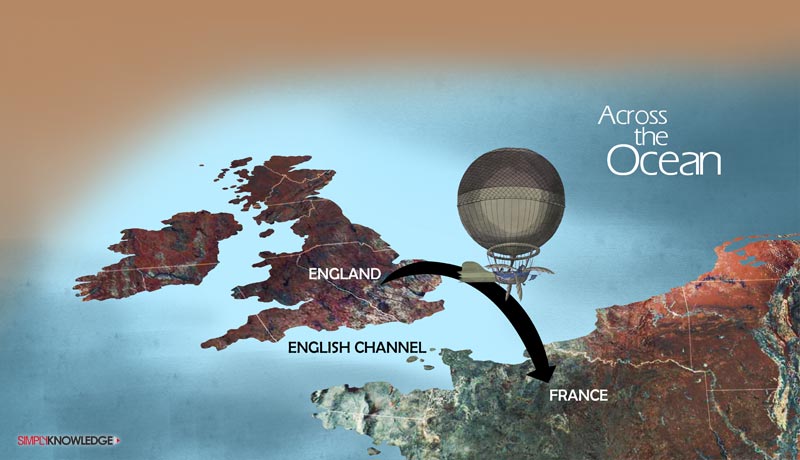
  • In the meanwhile, Jean-Pierre Blanchard and John Jeffries crossed the English Channel by balloon on 7 January, 1785. Flying from England to France, the pair stole the title out of Rozier’s hand.
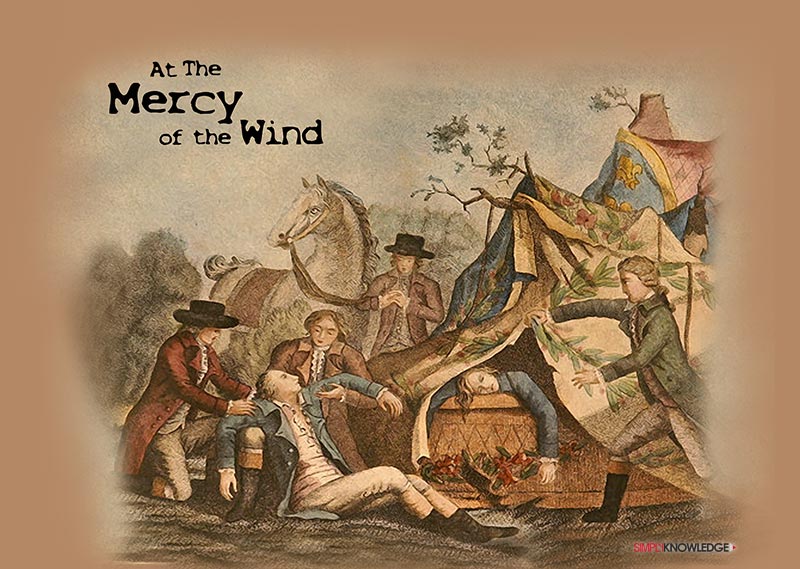
  • But Jean-François de Rozier was not to give up. On 15 June 1785, he set out on his journey across the English Channel with his companion Pierre Romain. After achieving initial lift-off, the wind changed direction and their balloon was pushed back, away from their goal and further into the mainland where suddenly their balloon deflated and the structure crash landed.
  • However, Jean-François de Rozier and Pierre Romain did earn the title of the first known balloon fatalities. This incident also affirmed that balloons were inadequate for being the perfect human flight instrument. But then floating by a balloon in the sky wasn’t exactly what man had aimed for, was it? His dream was to fly like the bird.
The First Aeronautical Engineer


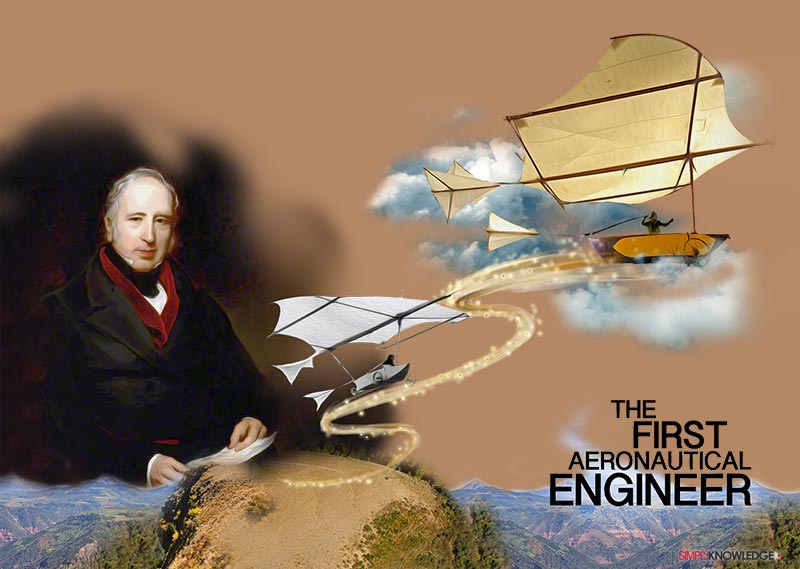
  • This was partly achieved by an English Engineer; a man who understood what was wrong with earlier attempts. George Cayley wrote the landmark three-part treatise titled On Aerial Navigation between 1809 -1810.
  • He identified the four important aerodynamic forces that determine the viability of an object flying. He termed these four forces as WEIGHT, LIFT, DRAG, and THRUST.
  • Weight is the gravitational pull acting on the object in flight; this weight is counter-acted by the object’s buoyancy as it creates LIFT. Lift is created by the high pressure wind that flows below the object in contrast to the low pressure air that moves at a faster speed above the object.
  • Similarly, THRUST is produced by the propelling mechanism that pushes the object ahead and DRAG is the effect the object faces due to the resistance offered by air. It is essential that thrust and lift are greater than weight and drag for any object to fly.
  • With this knowledge, Cayley attempted flying several flying-machines including airships, helicopters and eventually a full size glider in 1848. The glider was a fish-shaped airfoil kite attached to a boat on wheels. He tested this glider with a 10-year old boy onboard and the Monoplane Glider gracefully glided for a few seconds.
  • Later he made a few changes and constructed another design which he named the Governable Parachute. This time he sat onboard along with a coach-driver and in spite of the increased weight, the glider created enough lift to be afloat for a couple of seconds before it made a safe landing.
  • This was a success for Cayley and proof that his understanding of aerodynamics was sound. The success inspired many aeronauts, but not all.
RE-directed Efforts

  • It is not clear what the Aeronautic Societies made of this invention as there are no noted achievements following it. Perhaps Cayley’s popularity must have been limited or at the time the soaring balloons would have been more appealing.
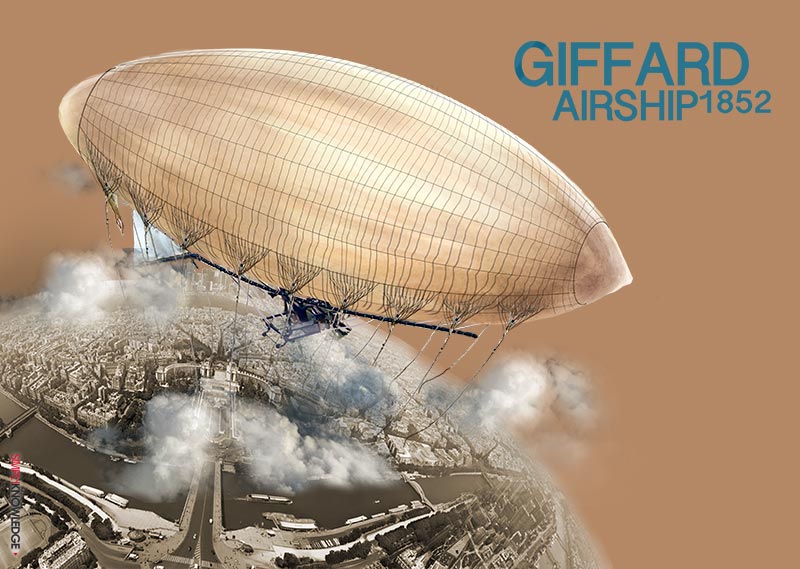
  • Frenchman Henri Giffard succeeded in incorporating a steam engine to the balloon that enabled him to attain control over its direction.
  • The Giffard dirigible or Giffard airship was built in 1852 and featured an elongated hydrogen-filled balloon that tapered towards either end. It had a steam engine placed next to the pilot and a pair of sails at the end to help control the airship’s direction.
  • Although the airship successfully travelled from Paris Hippodrome to Trappes, it was beaten by the wind and could not complete its return journey. Yet once again setting doubt in the minds of true aeronauts about this method of aviation.
  • After returning from his expedition to Egypt in 1859, Francis Wenham noted his findings amongst which he says "all imitations of natural wings" must be repudiated. He wrote that "... in designing a flying-machine, any deviations (from the design of natural bird wings) are admissible, provided the theoretical conditions involved in flight are borne in mind."
  • So three years later the word hélicoptère (helicopter) was coined by the French Gustave de Ponton d'Amécourt, while demonstrating a small model driven by steam from a coil-shaped boiler. It had two contra-rotating co-axial rotors due to which it flew well, but d'Amécourt could not build an actual model as there were no steam engines at that time that were light enough for flight.
Astuteness Astray

  • lphonse Pénaud was yet another French scholar who came up with several concepts for human flight by experimenting with twisted rubber to power a model helicopter. In 1870, he created a model helicopter which took flight on the power of unwinding twisted rubber.
  • Alphonse Pénaud was the originator of the use of twisted rubber to power model aircraft and his 1871 model airplane, which he called the ‘Planophore’ was the first truly successful automatically stable flying model. Pénaud is also credited with being the first to employ tail wings (which became known generally as "Penaud" tails) on his flying models.
  • With this success, Pénaud approached the Aeronautic society with the proposal of constructing a full scale aircraft. The panel decided to turn down the proposal and in an instant, Pénaud’s dreams shattered into pieces. The agony of these incidents eventually led him to commit suicide and his invention remained a toy for future generations to play with.
Wind Tunnels

  • Another significant invention in 1871 was the invention of the Wind Tunnel. Wind Tunnels are an enclosed passage through which air is driven out by a fan or a similar blowing device.
  • Aeronauts would place the object to be tested in the wind tunnel and pass a coloured gas or smoke to observe the flow of air and the resistance created. This process accelerated the trial and error methods as many designs could be tested in a short span of time.
  • It is disputed as to who made it first, as several aeronauts had it within a short span of time. But what is certain is that it enabled quick assessment and improvement of shapes.
  • The Wind tunnel played a vital role thereafter as almost every aeronaut’s designs were initially tested in it. Aeronauts now affirmed and accepted that the birds’ shape was an appropriate model for a flying machine. They also acknowledged that long and tapering wings offered lesser resistance.
Hopping towards Success

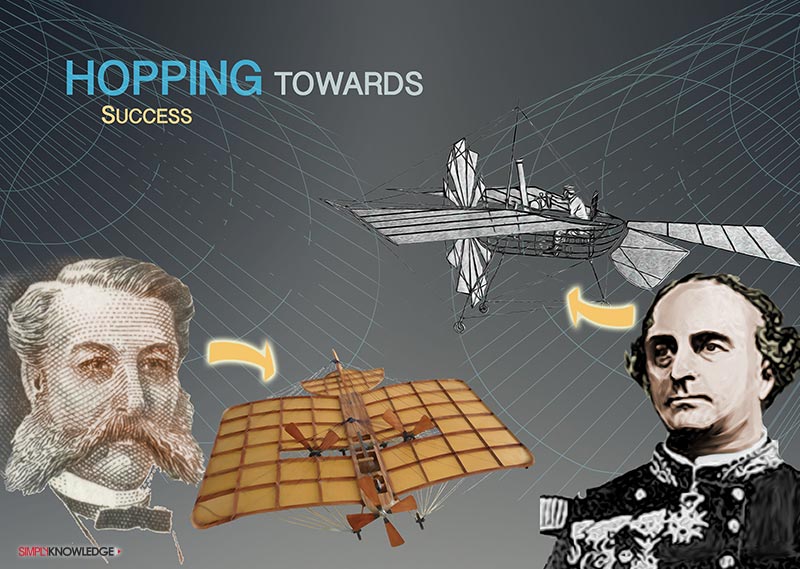
  • But this was already known to a few pioneering aircraft inventors such as Félix du Temple. The French aeronaut had already built his design of a flying machine seventeen years earlier in 1874. His aircraft hopped and stayed aloft for a while and landed safely in.
  • This short flight is recorded as the first lift-off of a flying machine on its own power. But that wasn’t the only thing worth noting. Félix du Temple also demonstrated that the maximum weight in a flying machine must be on the front side in the centre of the plane.
  • Felix and his brother contributed: appurtenances like a retractable wheeled landing gear, a tractor propeller and a semi-circular hull. They also set an example when they created their own light-weight steam engine instead of using already available heavy-ones.
  • A similar success was achieved by Aleksandr Fyodorovich Mozhaiski in Russia much later in 1884. But this one exceeded Felix’s achievements of height and distance, hence, showed room for improvement on his model.
The Lilienthal Leap

  • While Félix du Temple and Mozhaiski were hopping in hope of flight, a German inventor took a step towards pursuing his long-yearned dream of flight. Otto Lilienthal built an artificial hill, atop which he created a 4 meter high shed which gave him a total 15 meters of height above ground. The conical shape of the hill gave Otto the freedom of direction.
  • When Otto’s brother, Gustav returned from Australia in 1885, Otto was already prepared with his paperwork. He had been keenly observing birds and had created several polar diagrams scrutinising the structure of their wings. Based on his studies, Otto had designed many drawings of flying machines but no prototypes, as he lacked the technical know-how.
  • As Gustav Lilienthal was a pioneer in building and constructing technology, Otto relied on Gustav’s skills to materialize his designs. Gustav advised Otto to get a proper training before he started building a flying machine. So for the next few years, Otto studied at the regional technical school in Potsdam for two years.
  • Otto published his understanding in 1889 as ‘Der Vogelflug als Grundlage der Fliegekunst’ (The flight of birds as the basis of the fly Arts). By 1891, Otto proved his understanding on the subject as he began making successful gliding structures.
  • “It is easy to invent a flying machine; more difficult to build one; to make it fly is everything."
  •                                                                                                                                         -- Otto Lilienthal 

  • He would further improve on his designs and make a better one which led him to make over 2000 successful glides, commonly witnessed by a crowd and often photographed for news releases.
  • In 1895, Otto went a step further and successfully flew on a biplane glider. This created a world-wide sensation and his reports published in the ‘Zeitschrift für Luftschifffahrt und Physik der Atmosphäre’ (Research paper on Dynamics of Flight and Atmosphere) and ‘Prometheus’ were translated into several languages. Pioneering aeronauts from all over the world like the American Samuel Langley, the Russian Nikolai Zhukovsky came to meet Lilienthal.
  • But on 9th August, 1896, the ‘father of flight’ met with a major accident as he failed to control his glider while flying. “Sacrifices must be made” were Otto’s last words to his brother before he passed away. Otto’s demise was covered in many newspapers and some even commented that the development of aeronautics was indefinitely hindered.
Wrights’ Way in

  • Amongst many, this news was read by a 30 year old man named Wilbur Wright who had capitalized on hiss innovative bicycle design along with his younger brother by 4 years, Orville. Otto’s popularity and achievements had reached them well before and the two had been intently following international aeronautic news.
  • As Wilbur’s brother Orville learned that Otto crashed due to poor control over the glider’s inclination, they got the last piece of the puzzle. Earlier that year they had noticed Octave Chanute’s ingenious idea of test flying-machines over sand dunes for safety and earlier they had learned about Samuel Langley’s unmanned model’s flight using a steam engine.
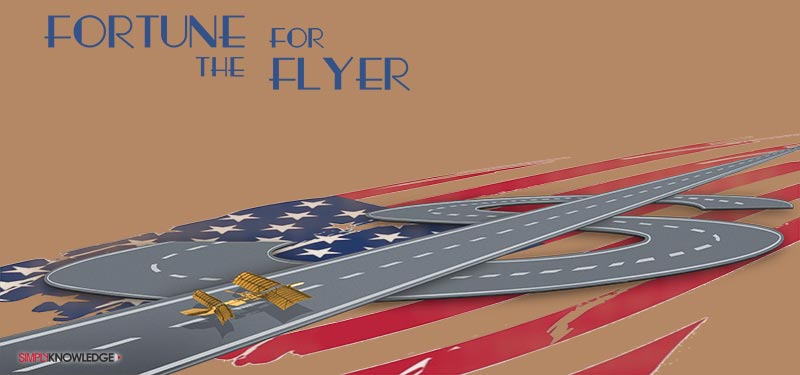
  • Although these set of events inspired them to pursue the quest of flight, the final plunge was taken when the brothers realized that there were returns in it. At the time, Samuel Langley had received a sum of $50,000 from the United States War Department to build a full sized “aerodrome” of his successful design. This was what triggered the Wright brothers to shift their focus from their bicycle business to flying machines.
The Smart Move

  • The first thing the brothers did was, they contacted the Smithsonian Institute and obtained a list of all the publications there were till that time. "I wish to avail myself of all that is already known and then if possible add my mite to help on the future worker who will attain final success." – Wilbur to the archivist at Smithsonian.
  • After assimilating the knowledge known to earlier aviators, Wilbur had a clear idea of the aerial mechanics. Lilienthal had taken manned flight and given wings to mankind, but lacked two important counterparts to commercialize his inventions. One was the power to take off without relying on the winds and second was to manoeuvre the flying machine at the pilot’s will and not the winds.
  • The answer to the first problem was already solved by Samuel Langley by lifting-off a model aerodrome with the power of a steam engine. Orville knew that given the resources Langley had, it was only a matter of time before he invented a commercial flying machine. So they had very little time to solve the second problem; the problem of control in flight.
  • Lilienthal’s method of shifting body weight was proved insufficient by his death. Wilbur had read in Wenham's ‘Aerial Locomotion’ about birds twisting their wing tips to change directions while flying. But the question now was HOW to twist the wings of an aircraft?
  • After several impractical solutions, a feasible one came about when Wilbur was toying with an empty cardboard box of a cycle part. The box resembled the wings of a biplane and when Wilbur held the opposite corners with his hands and pressed them – the box twisted.
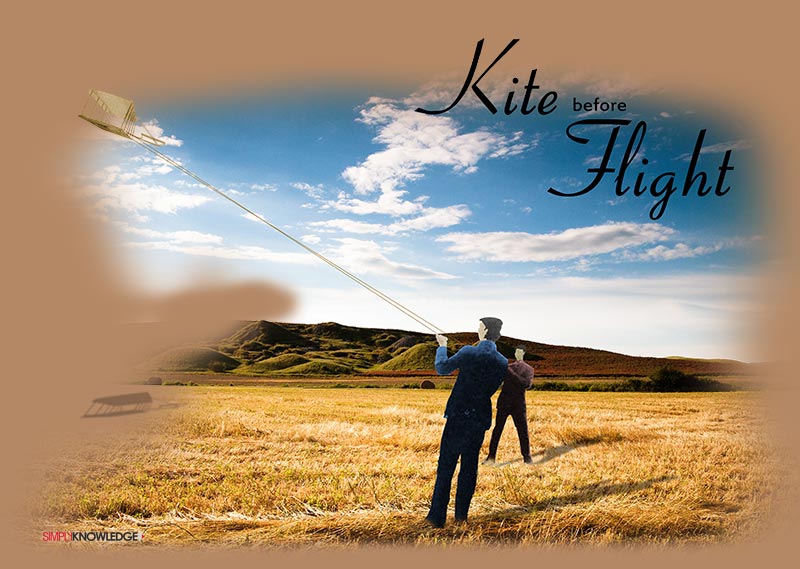
  • That was it. The brothers instantly started preparing designs to achieve this in a full sized aircraft. They used Chanute’s method and rigged a kite model of their biplane with control cables for testing it. With two sticks as controls, Wilbur manoeuvred the kite model excellently in 1899.
Design Dilemma

  • After thorough research and a dialogue with the Weather Bureau, Wilbur concluded Kitty Hawk to be the best test field option for them. Kitty Hawk was a beach with good winds, little trees and a long stretch of soft sand.
  • Wilbur arrived at Kitty Hawk on 13th followed by Orville on 28th September, 1900.  While focusing on their preparations, both had missed on the aviation news of the German count Ferdinand von Zeppelin’s LZ1 making history with its first flight of 18 minutes. The only thing in their mind at the time was to make a plane.
  • To build a full sized biplane glider, the Wrights relied upon Lilienthal’s data and accordingly modified Chanute’s design. They decided on a design that had slightly bigger wings and lightly rigged along the chord (width) as compared to Chanute’s. The brothers also invented a ‘hook-and-eye’ hardware that attached the struts to the wing enabling them to twist.
  • The biggest visible difference in the Wright brothers’ design was the elevator (tail). The elevator was placed in front of the aircraft instead of behind for the simple reason of control. It was easier for the pilot to alter the position of the elevator surface by just stretching out in front and adjusting it. It also gave him a visual reference of the elevator surface’s position and the lift it created.
  • What the brothers did not know, was that this simple modification created a huge difference. By placing the tail in front, the aircraft acquired greater lift while ascending because a tailed flying machine has to create a negative lift to raise the nose of the craft. In this case – the elevator WAS the nose, so it could lift itself and the craft would follow.
  • Wilbur initially flew the glider as a kite by tethering it and controlling it from the ground while it flew. After they had tried flying it with a 12 year old kid, Wilbur decided to take a hands-on experience. Their glider took several test flights as Wilbur decided to learn piloting it, but even though theoretically sound, the glider lacked a proper control system.
  • The brothers returned home after sacrificing their glider in frustration on 23rd October, 1900. Their determination to invent a flying machine was shaken by this experience but was far from shattering. Wilbur returned the next year and tried all possible modifications, but his tactics failed yet again.
Re-Research

  • One good thing that happened in 1901 was that the Wright brothers were paid a visit by Octave Chanute, who was mesmerized by their achievements as he realized that the Wright glider flew better than his own.
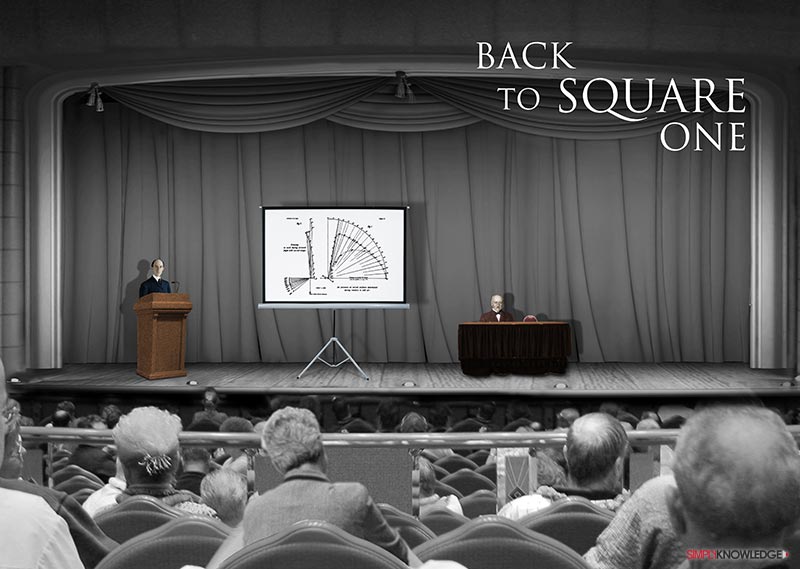
  • They were surprised when Chanute, as a gesture of appreciation, invited Wilbur to address the Western Society of Engineers. While giving his speech, Wilbur told his audience that Lilienthal’s statistical data was inaccurate and that for further reference they would have to create their own tables of lift and drag. The speech was well received and the Wright Brothers got the inspiration to continue.
  • Wilbur and Orville applied existing techniques and also created new methods to measure lift and drag. They tested over 200 airfoils and by the end of their research, they realized that Lilienthal’s statistics was quite right! Thereafter they turned their attention to their original problem – that of CONTROL.
  • The brothers returned to Kitty Hawk by the end of August 1902 with a new, improved design of a biplane. The wings were longer and the elevator was extended further ahead for better leverage. But the major difference this time was that the biplane had a Rudder (tail).
  • Initially Wilbur had thought that there was no need for a rudder as they were twisting the wings for navigation, but he realized he was wrong. The rudder was essential to prevent the glider from sliding while twisting the wings. This was probably the last piece to perfect their biplane glider.
  • They tested the biplane glider as a kite and could clearly notice the improvement. After piloting it for several flights, at times even 100 times a day, the brothers returned to Dayton, Ohio, in search for motive power.
Power to Propel

  • According to Wilbur’s calculations they needed a gasoline engine that would weigh no more than 180 pounds and deliver at least 8 horsepower. Orville asked ten major engine manufacturers for something similar but none had it. The makers also refused to build a customized engine for them.
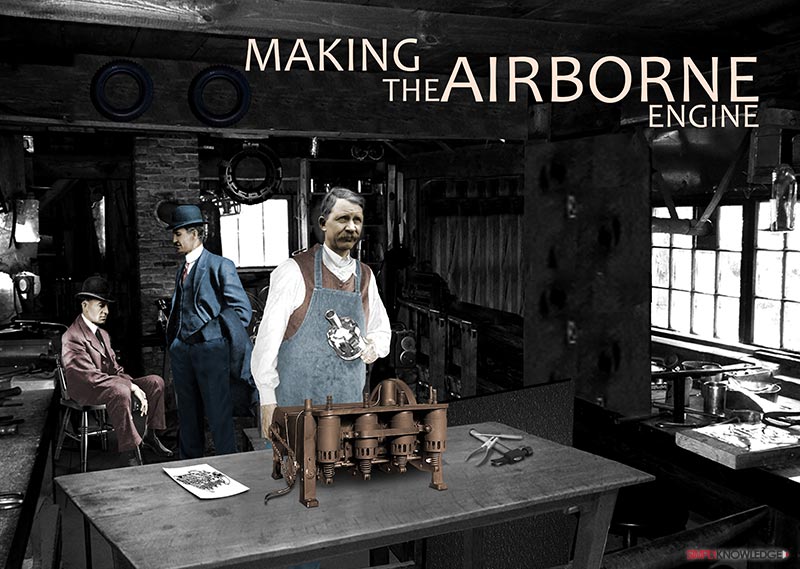
  • So the brothers decided to make their own engine with the help of Charlie Taylor, their bicycle mechanic. Together the three developed and built an engine in just six weeks… but it showed - It wasn’t all ok.
  • Charlie kept working on it and by May 1903 the engine worked well. In the mean time, the two “ill-tempered” brothers settled their differences about the shape, size and style of the propeller. Once this was done, they left Dayton in September for Kitty Hawk with parts of their biplane.
Race to Riches

  • The brothers were aware that Langley had built his ‘Aerodrome A’ with a custom-designed engine and was due to test it in October 1903. Orville knew that if Langley made his machine fly, the patents would be issued in his favour and no such monetary benefits would be spared for the Wrights.
  •  To their relief and Langley’s despair, as soon as his ‘Aerodrome A’ was launched off a houseboat, it crashed nose first into the Potomac River. The reason was said to be that the balancing wasn’t perfect. Thereafter Langley started repairing and revising his aerodrome with the remaining funds he had.
  • This gave the Wright brothers a momentary relief as they themselves faced technical problems with parts of their biplane. Orville had to go back to Dayton to fix the problem and on his return he gaily brought the news that Langley’s second attempt had also failed and the press was condemning the whole effort.
  • Wilbur was scantly affected by this. He continued his preparations by testing the engine and plane for any more problems. By 12th of December 1903, they were ready with their apparatus.
I FLY

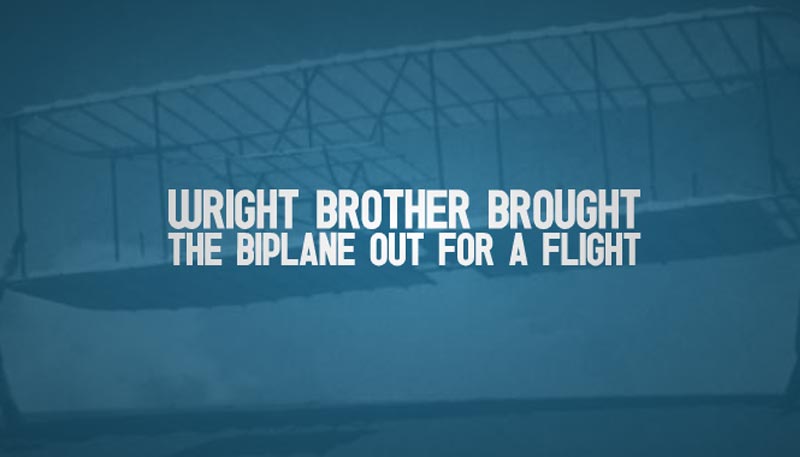
  • On 14th of December 1903, the brothers were so anxious that on a chilly morning they brought the biplane out for a flight with some help from the life guards. Wilbur set out the wooden rail that acted as a runway for the biplane. After a coin toss between the brothers, Wilbur got onto the biplane.
  • The gasoline engine started and everyone was ready. But the plane did not move. The restraints were too tight for Wilbur to loosen. Orville and the guards provided help and as soon as the wires were set loose the biplane bolted ahead, reaching only 3/4th of the rail before it finally took off.
  • Orville saw the plane rise, fly and then drop down. Wilbur and Orville figured out that since Wilbur had climbed too high too fast, the plane had stalled and hence it dropped down. The brothers repaired their biplane and sent their father a telegram - "MISJUDGEMENT AT START REDUCED FLIGHT... SUCCESS ASSURED KEEP QUIET."
  • On 17th, Wilbur and Orville were ready for their second attempt. This time it was Orville’s turn to fly and Wilbur was worried for his brother’s safety. After bidding each other luck, Orville took off on the biplane. The plane rose and dove repeatedly as Orville struggled to maintain control.
  • After a few ups and downs, the biplane landed safely. Technically it was a flight, but the brothers weren’t satisfied. They tried alternatively for a couple of times, but on the fourth run they saw a glimmer of success. Wilbur took off much the same way, but after a rodeo with the plane, he finally got the hang of it. He flew 852 feet in 59 seconds when a sudden gust of wind put the plane out of his control and down to the ground.
  • The brothers had sent a telegram to their father and had asked him to inform the press about their success. 17th December, 1903 marked the day when mankind had finally achieved flight like the birds. Well, the flight was more like a nestling learning to fly but at the end it was a flight - RIGHT!
The First Flight

  • But this nestling (Flyer 1) was picked up by the wind and shattered to pieces that day. Later when the brothers built the second one, they realized that the first flight had been lucky. They had attained flight primarily as the winds were blowing at great speed and not by the power of their engine.
  • The first actual flight was made by Orville on 20th September 1904, at Huffman Prairie, Ohio after being catapulted. He flew a circuit of the prairie in Flyer 2 and landed back where he took off. This was the first time an aircraft had landed on its starting point after a sustained, controlled, powered flight.
  • However, for all their achievements the Wright's flying machine still had serious shortcomings. In between their long flights, there were many short hops that ended with the aircraft out of control. Accidents were a daily occurrence and some of them potentially serious.
  • There was a lot to be added to make an ideal aeroplane. A major contribution was done by Alberto Santos. The Brazilian had moved to his father’s native nation (France) and was already a brilliant aeronaut. He started off with lighter-than-air balloons and dirigibles (airships) and by 1905 turned his attention towards heavier-than-air aircrafts.
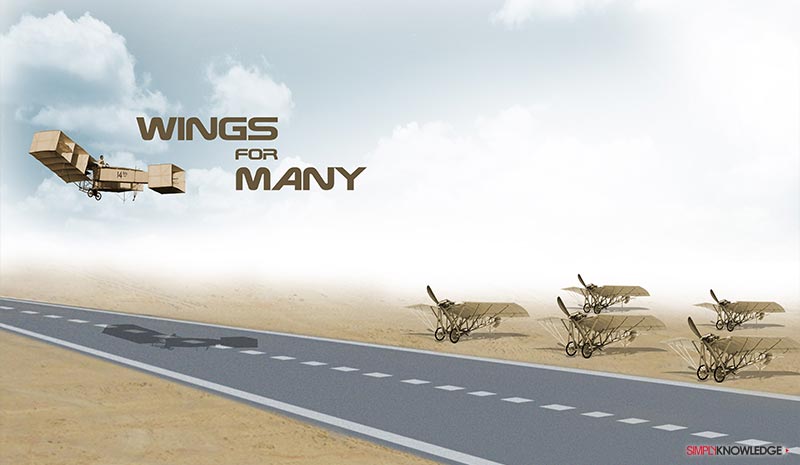
  • On 23rd October 1906, Alberto Santos became the first person in Europe to achieve winged flight by piloting his 14-bis plane in Paris, France.
  • The event was witnessed by many and was also well recorded. Through this, he added movable surfaces (the precursor to ailerons) between the wings to gain more lateral stability.
  • Within just two years Alberto had popularized aviation to such an extent that a company named ‘Clément-Bayard’ made 50 aircrafts of Alberto’s ‘Demoiselle No 19’ design. These were the first mass produced aircrafts in the world!
  • Now that flying was not an enigma, the answer brought several to testing grounds with a variety of ideas. Most would try a design of their own and the rest would simply construct aircrafts and mint on it.
  • Like the ‘Short brothers’, who started manufacturing aircrafts after obtaining rights on Wright’s design in 1908. Their company in London shifted from building hot air balloons to flying machines and made it in history as the first aircraft manufacturing company.
  • Other associated inventions and gadgets conducive to flying were also incorporated in the newly developing aerial vehicles. Navigational aids like the Creagh-Osborne compass were fitted in aircrafts from 1909.
Fare in Flight

  • These events were the seeds of competition against the trending invention of airships. Big tapering balloons filled with hydrogen gas for lift and powered by a steam engine for control were being commercialized by DELAG, acronym for Deutsche Luftschiffahrts-Aktiengesellschaft (German for "German Airship Travel Corporation").
  • DELAG was founded on 16th November, 1909 and was the world’s first airliner to use an aircraft in revenue service.
  • Meanwhile its competitor – the aeroplane, needed more preparations before it could enter public service. A part of it was achieved in 1910 as Orville Wright inaugurated the first commercial flight school in Montgomery, Alabama.
From Sports to Spying

  • Ironically, when asked the question - What would be the application of an aircraft once it flew? Most aeronauts would answer like the Wrights did - “for sports of course.”
  • Perhaps if you notice, most successful pioneering aviators were inspired to pursue flight for more practical reasons. One evidently being its military use.
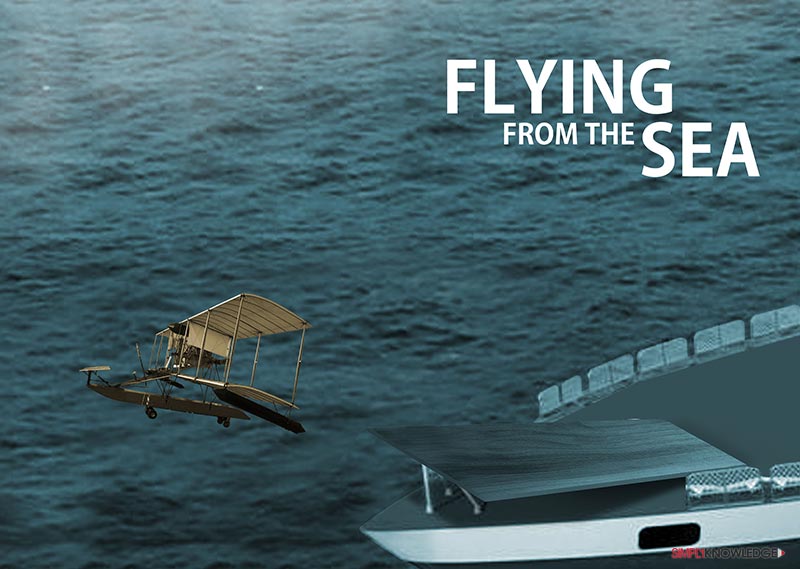
  • Glenn Curtiss’ initial success of flying from a ship led to the successful flight of the first seaplane on 26th January, 1911. This plane featured a central pontoon (float) and wingtip floats which enabled it to use water as its runway.
  • Later that year the invention was used to perform reconnaissance missions by the Italians against the Turkish in war. It was also used for bombing and shelling. Similar practices were followed by other countries until the actual use of the plane was proposed during World War 1.
Army in the Air

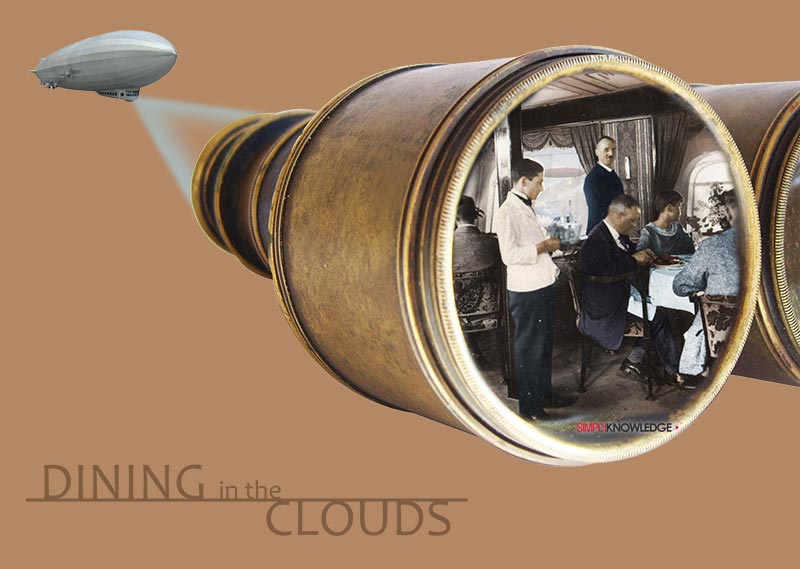
  • Before the war, German Zeppelins operated on a regular basis in Europe. They flew international passengers over country borders, but as the war commenced, these passengers were struck with fear as Zeppelins raided their airspace and conducted aerial reconnaissance missions over land and sea.
  • As the war progressed, Zeppelins also acted as bombers by showering bombs onto military bases. This application of the airship grew in number over time until they were countered by bad weather.
  • Powerful search lights and disparaging fire from land also exposed the Zeppelin’s shortcomings as an efficient war ship. In the case of airships, even a few bullets could set it ablaze, whereas monoplanes and biplanes easily evaded the assault because of their size, manoeuvrability and speed.
“Kh-rr-hkkr... What?!”

  • This application gave rise to the necessity of a competent method to communicate with the pilot while the plane was in air. Earlier methods like visual signs and message boards were inefficient when detailed messages had to be conveyed. As for the pilots’ response, they used to write their message on a paper and drop it to the ground with a heavy object.
  • Clearly the methods in use were time-consuming and error-prone which could result in grave consequences during war; and that is exactly what happened. Aircraft engineers and operators urged for a better way to communicate.
  • The Morse code served as an instant relief as pilots could relay their messages in codes of ‘dits’ ‘•’ and ‘dahs’ ‘ to the ground control where the message was received in print and decoded. This means of transmitting messages was far better than the traditional methods but not the best.
  • The breakthrough in air-to-air and air-to-ground communication came with the introduction of radio transmitters. In 1917, the American Telephone and Telegraph Company (AT&T) invented a device that could transmit radio signals from the aircraft to the receiver on the ground.
  • The second part of the endeavour was achieved a month later as the company employees sent a message from ground to air. Within a month, they also connected two aircrafts in flight via radio. By the end of the year radio communication was initiated in aviation with great feasibility.
Nifty Metal

  • Aircrafts as a whole saw a monumental advancement in Germany as the design transformed the lightweight, wood-and-cloth flying machine to a hefty, all metal aeroplane. The man responsible for this milestone achievement was Hugo Junkers and his team.
  • The Junker J1 was an aircraft that was made by Hugo for the government in 1915.  The Government requisite was of a metal-skin aircraft with the capacity of two pilots that could fly at the speed of 130km/h. Within just four months, Hugo summoned the government experts to inspect his all-metal aircraft.
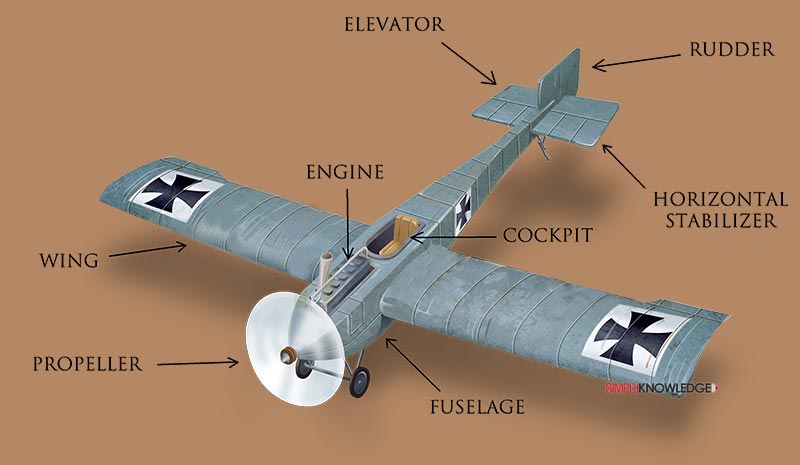
  • What the experts saw was beyond belief; the first sight of the plane had left them tongue-tied. Oddly, the Junker J1 wasn’t a biplane as expected! Its fuselage (body) extended a single wing on either side which tapered visible towards the end. This was an adaptation of what is known as the cantilever in the construction technology and had gotten rid of the need of all major external bracing that was used in monoplanes so far.
  • The inspection was through and after the team of experts were satisfied that the plane was indeed sound theoretically, they went ahead with practical testing. I’m sure a few were sceptical if it would fly at all.
  • After a few runs, their doubts disappeared as the Mercedes DII - 120hp engine fired up and propellers dragged the heavy metal structure off the runway and into the sky. The complete structure including the single set of wings proved its aerodynamic ingenuity as the aircraft reached a top speed of 160 km/h.
  • The aircraft was later nicknamed ‘Blechesel’ which meant “Metal Ass” and was further developed upon, resulting in its more efficient successors Junker J2, Junker J3 in the following months. Hugo went on to make the first fighter plane Junkers D.I and the first successful civil aircraft named Junkers F.13 just before the war ended.
For the People

  • This was classified news which only a few knew at the time. A more popular achievement of the year was John Alcock and Arthur Whitten Brown’s flying expedition from the coast of Canada to Ireland. This was the first continuous flight made across the Atlantic and was commended mostly by the people of United Kingdom.
  • The flight was a remarkable feat as aircrafts of the time were not designed to carry the amount of fuel required to fly for 16 hours continuously. The achievement included the flying of a machine carrying two men, a bundle of mail and tons of fuel. Its success was followed by the inauguration of the National Air Mail service in 1918 and the Americans could now fly their posts to its destinations.
  • Meanwhile on a coast across the Atlantic, Arthur Chalk set up the world’s first airliner called Chalk's Ocean Airways in USA in 1919. Arthur Chalk was a bicycle mechanic who had bargained flying lessons in exchange for repairing a French pilot’s plane during the same time the first seaplane was flown.
  • After thorough hands on experience, Arthur bought his own plane and practiced for six years before he advertised his services on a beach street of Miami with an umbrella and a desk as his office.
  • He flew passengers to the nearby islands of the Bahamas and from there to Miami in a seaplane which he piloted himself. Its success inspired other entrepreneurs to initiate similar services, thus bringing a new application to the invention.
  • One such example could be the Flughafen Devau airport in East Prussia. Opened in 1922, it was the first permanent airport and commercial terminal used solely for commercial flights.
  • On the other hand, most pilots who were in the War had gained great control over these flying machines and were eager to showcase their abilities. Hence, air shows and races were arranged after the war to vent out their desires of showcasing their capabilities.
Crowd’s Confidence

  • The winged aircraft was becoming more popular with people in United States as the automobile legend Henry Ford showed participation. With his son Edsel Ford, he introduced America to all metal planes with the Ford Trimotorin 1926. Using extensive advertisement and promotions, Ford rid the masses of the fear of flying and convinced them that the aircrafts were a safe mode to travel.
  • Ironically, very few knew that Ford himself had been afraid of flying and only sat in an aircraft thrice in his lifetime. That however, did not stop him from sponsoring the ‘Air Reliability Tour’ which aimed to encourage reliability and safety for commercial aircrafts.
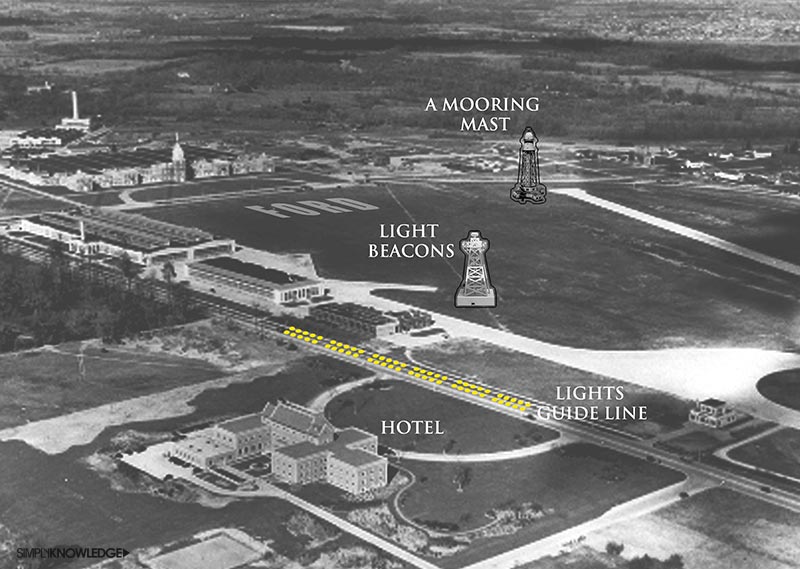
  • Apart from generating the general public’s confidence in flying, Ford also made more worldly contributions by upgrading the airport layout. The basis for our recent day airports was laid by Ford in 1925, as he included a mooring mast for airships to dock and light beacons to guide airplanes to his Ford Airport in Dearborn, USA. He also incorporated a hotel and other complimentary institutions to make the flying experience more convenient.
  • Ford’s involvement in aviation also resulted in technological advancements. He developed a radio range beacon which helped pilots to stay on course even during hostile weather. In 1927 these beacons were installed and proved to be so helpful that the government found it almost essential to adopt the system in all airports.
War-time Improvements

  • During war-time pilots and engineers grew aware of the fact that regular fuel was used in massive quantities by the new engines. So, aeronauts and scientists joined hands to develop a fuel which was more suitable for aircrafts known as Aviation Fuel orAvgas.
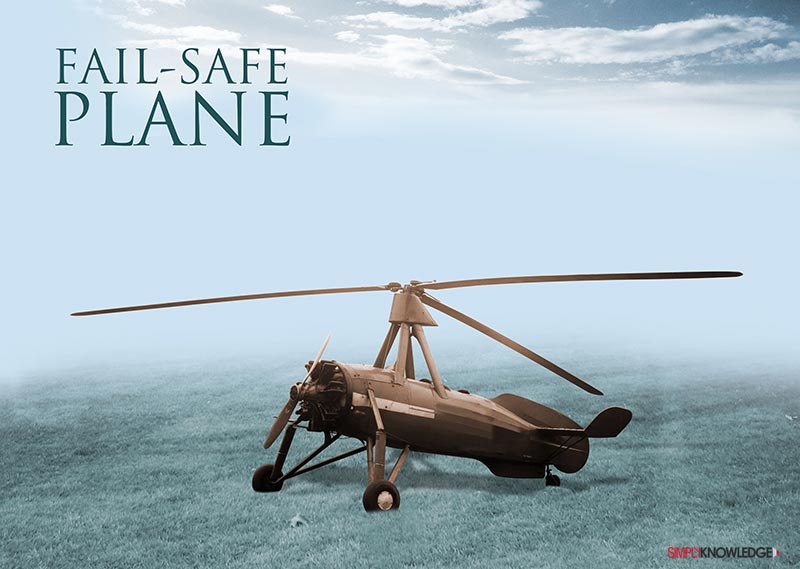
  • In 1925, a new breed of aircrafts came into existence as a Spanish engineer named Juan de la Cierva took an eight minute long flight with his Autogiro. It was a plane fitted with an up scaled propeller as its roof. Cierva invented this addition as a failsafe considering the high number of accidents due to engine failure.
  • The Autogiro also initiated a new branch of aerial vehicles as the vertically placed propeller displayed a capacity of carrying the aircraft itself.
  • While several new world records were archived by daredevil pilots throughout Europe, Russia and America, airship technology also advanced and in October-November 1929, Graf Zeppelin completed the first round-the-world flight.
Change of an Era

  • The use of aircrafts became a common means of transport as zeppelins conducted scheduled services and passenger planes were upgraded with better engines and pressurized cabins. The first commercial aircraft with a pressurized cabin was the Boeing 307 Stratoliner (1935).
  •  Alternatively, the world’s first practical helicopter was made in Germany on 26th June, 1936 by Heinrich Focke at Focke-Wulf. The following year the German helicopter Fw61 made history by breaking all existing rotorcraft records in a demonstration.
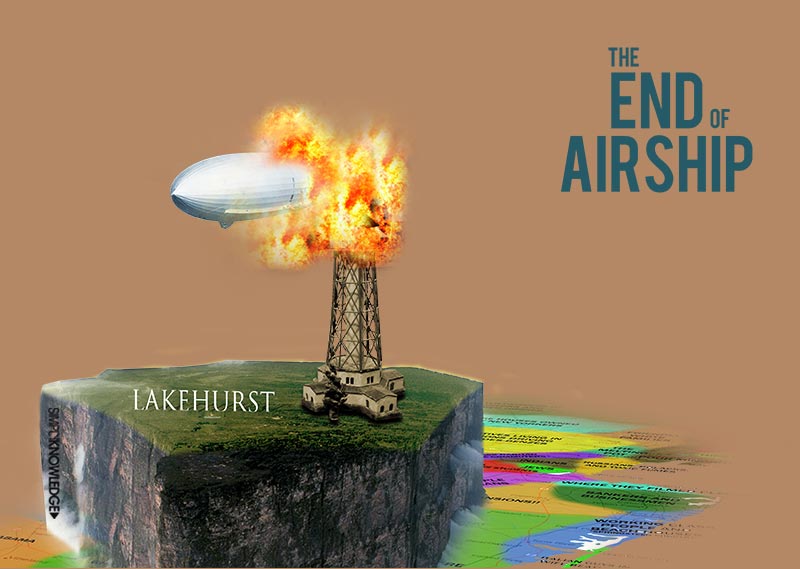
  • In 1937, a German Zeppelin – Hindenburg caught fire and crash-landed at Lakehurst, New Jersey killing 35 of the 97 people on board. The event was well covered by the media and its dramatic impact on people ended the era of dirigibles.
  • The use of zeppelins came to an absolute end with the onset of the Second World War. Experiences of the First World War and the Hindenburg incident had removed zeppelins out of the equation for any major military application, and it was during this time itself that winged aircrafts proved their superiority amongst other airborne vehicles.
From Spying to Sparring


  • World War II was more like a competition of technology, and the country that surpassed its rival was on the path leading to victory. Hence, it was at this time that nations diverted all their attention towards technological advancements; including the field of aeronautics. The outcome was the foundation of what we see today.
  • The war acted as a stimulant and introduced several alterations in the field of aeronautics. It was during this time that planes were mass produced; aircrafts were designed and built to perform specific tasks with great precision.
  • Just as the war started in 1939, the Germans revealed the world’s first functional jet plane – The Heinkel He 178. It was the fastest plane and could fly higher than most aircrafts at the time. It was followed by the world’s first operational jet aircraft in 1942 called Me 262.
  • The use of aircrafts as air support for ground troops was one of the pioneering strategies that emerged during the Second World War. Countless aircrafts were produced by both belligerents and numerous “Dog fights” or fights in the sky took place in the European airspace. The invention that had the people of Europe awestruck a few years back now spawned terror at the mere sound of its approach.
  • Passenger transport in Europe was reduced to infinitesimal numbers and eventually stopped after a few years into the war. This barred service must have signified the importance of air-travel to the few who took it casually. These passenger aircrafts were then modified as per the nations’ requirement to serve in the war.
War’s Worth

  • The use of aircrafts for transporting cargo was also taken to the next level as mighty engines powered gargantuan planes that carried massive loads quickly and safely as compared to any other means of transport. Aircrafts had grown to be the backbone of most military strategies by this time.
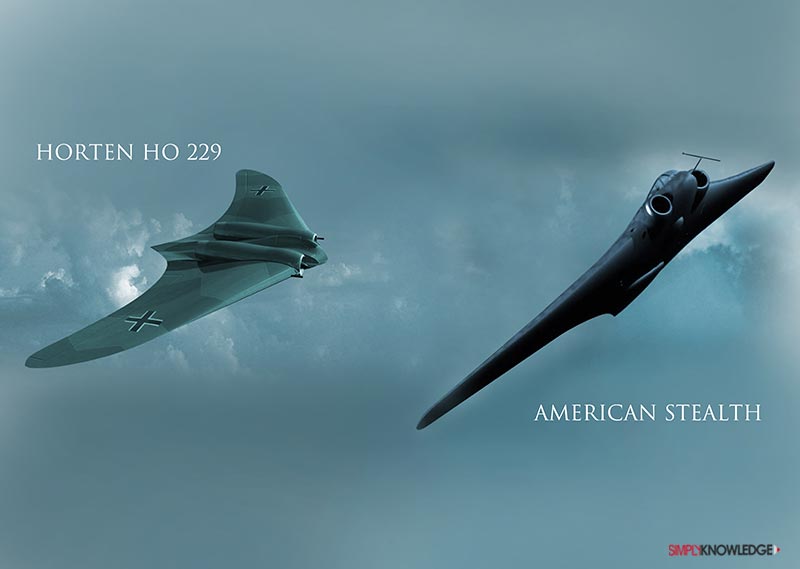
  • To counter these advantages, the British developed a device that could map a limited air space and display the presence of any metal object flying in the sky. Known as the Radar, this invention was also of enormous importance for the military. Against this the German engineers created a wooden plane called Horten Ho 229, which inspired and guided the development of the modern stealth fighter.
  • The German contribution to the world was immense during the times of war as they invented several advanced mechanisms such as the highly improved autopilot system in the first cruise missile, the V-1.
  • The list of contribution also includes the first ballistic missile (V-2), the first and only rocket-powered combat aircraft Me 163 and the first vertical take-off manned, point-defence interceptor – Bachem Ba 349.
  • One of the most undermined yet outstanding inventions of the Germans was the jetpack called as Himmelstürmer (sky trooper). This wingless flying device enabled men to take long distance, calculated “jumps” using jet-engine power. They were safe and ingeniously effective in serving their purpose of aiding soldiers while crossing mine-fields and other hurdles.
  • After the War, the device was seized by the allies and the technology that enabled humans to fly without massive metal wings was discarded.
Sound! Follow me...

  • Once the fighting ended and governments were focused on re-building their economies, aircrafts received a great deal of attention. Passenger services started immediately once the war-effects had faded. International flights were established throughout the world and airliners sprung back into action.
  • Meanwhile, the technology invented during the crisis was explored and achievements were recorded “officially”. The sum of knowledge gained on aerodynamics, engines, etc. had enabled pilots to travel at great speeds. This was taken to another level as claims were made by WW2 pilots to have achieved speeds faster than ‘Mach 1’ (i.e. speed of sound).
  • This speed was attained on 14th October, 1947 when Chuck Yeager flew his XS-1 at a raging pace of 1.06 Mach. By the following year, the sound barrier was broken absolutely and soon jet planes travelled at supersonic speeds on a regular basis.
  • The Jet technology also entered commercial services with De Havilland DH 106 Cometin 1952. But the adjustments made to commercialize the plane brought more problems and the Comet had to cease its services temporarily.
  • People’s faith in jetliners dropped tremendously and it wasn’t until 1976 that a few would dare to travel in a Jet plane comfortably. The reassurance of safe, supersonic travel was offered by the improved design of the British Concorde. Still, several problems persisted and the supersonic service could not achieve widespread acceptance.
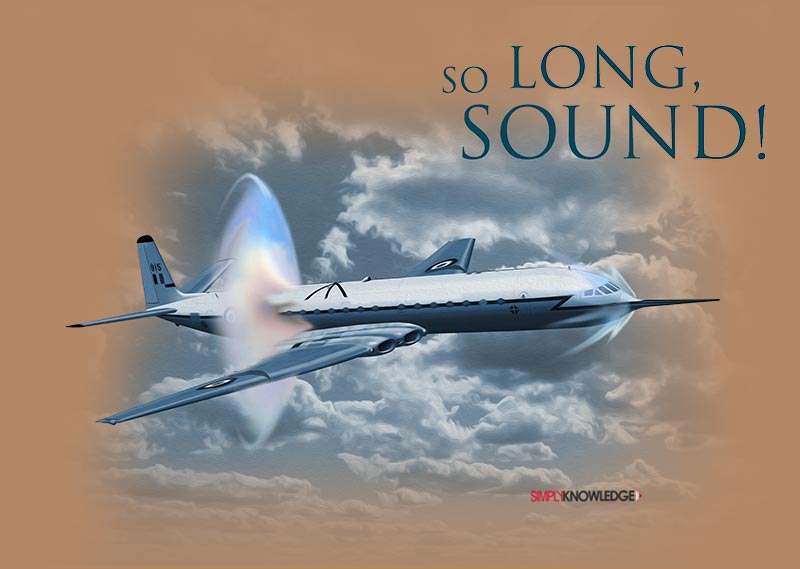
  • For a passenger, it was expensive to fly in a supersonic plane, but at the same time for a person over whom the plane flies, it was irritating. This was because once an aeroplane achieves supersonic speed ( > Mach 1) a loud “BOOM” was heard and a small circular cloud is seen.
Around the world in 80 years

  • Several other records were set by the end of the century; such as the flight of Dick Rutan and Jeana Yeager in the Rutan Model 76. The duo flew around the world non-stop and landed on 23rd December, 1986 at the same airfield in California.
  • Now if we flash back in time, the first flight of mankind to take-off and land after a few minutes at the same spot was in 1904 by one of the Wright brothers. The Rutan Voyager took-off from an airbase in Lancaster, USA and landed at the same place after 9 days.
  • Individually the two trips were personal achievements but as a whole they define the speed of human progress in the field of aeronautics. And trust me, 82 years is not a very long time at all… not if one considers the time span of millenniums since the first step was taken towards flying – The URGE to FLY.
  • The wish that accompanied this urge to fly was to reach the sky and grab the moon. This was also realized as USSR launched Sputnik and U.S.A. hoisted their flag on the moon in the 20th Century.
  • By the end of 1900s, aeronautics had advanced so much that the Russians created a gigantic 640 ton aeroplane named Antonov An-225 Mriya. It was an era of computer aided design, and engineering planes like the Boeing 777 and also a plane like Boeing 747 that could carry a spaceship shuttle!
  • But this wasn’t the end of it; further improvements were made in terms of technology and services. The 21st century saw an extensive use of rocket power as satellites and space-shuttles were launched into space for search and research of our solar system. However, the age of aircrafts did not fade with the onset of the space age.
  • In fact it aided aircrafts to perform more swiftly and safely. The use of satellite navigation has safeguarded piloting aircrafts through unfavourable conditions. It enabled pilots to know exactly where they are what lay ahead. Along with the visual guidance of Global Navigational Satellite System during flight, communication with the Air Traffic Control (ATC) tower has also minimized the room for error.
Racking and Stacking

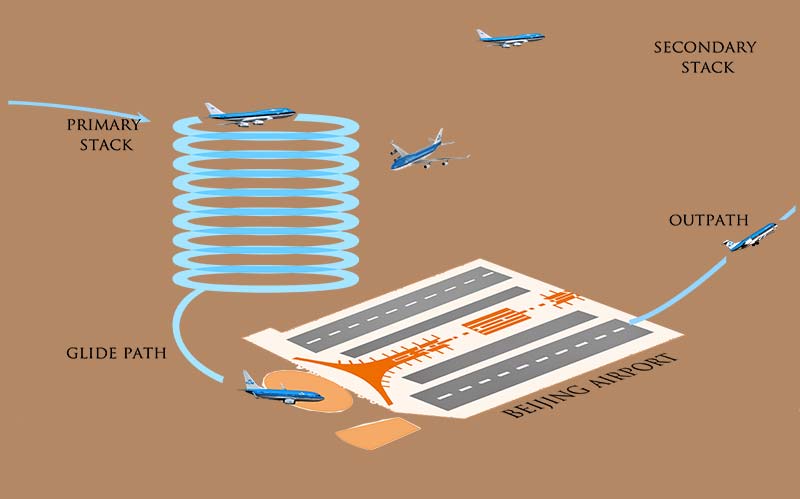
  • To better understand this, let’s take one of the largest and busiest airports today – the Beijing Capital International Airport. This airport boasts of a footfall of around 73 million passengers and caters to more than 600 flights of about 70 international airliners. 73,000,000 people! 600 planes!
  • Now obviously the airport does not deal with 600 planes at a time, but many a times the runway traffic is busy enough to make incoming planes wait for the landing. The way it’s done is what fascinates me… So the air traffic control personnel have precise knowledge of the airfield traffic through their gizmos and gadgets. If they receive a pilot’s request for landing when no runways are available, they simply make the plane go in circles till it’s cleared for landing.
  • Seriously! It’s called STACKING; because the awaiting plane has to fly in circles over a beacon chosen by the air traffic control operator. Generally there are more than two beacons for the airport’s disposal. These beacons are situated safely outside the airport’s airspace to avoid accidents. Once the airport has a runway clear for landing the aircraft is contacted and guided accordingly.
  • Also for those who think that pilots just have coffee and flirt with airhostesses because of the autopilot facility. NO! That’s not all they do! These planes are put on autopilots during flight but taking-off and landing is done manually. So if you have any friends who fly planes, go easy on them fellows!
Opulence TODAY

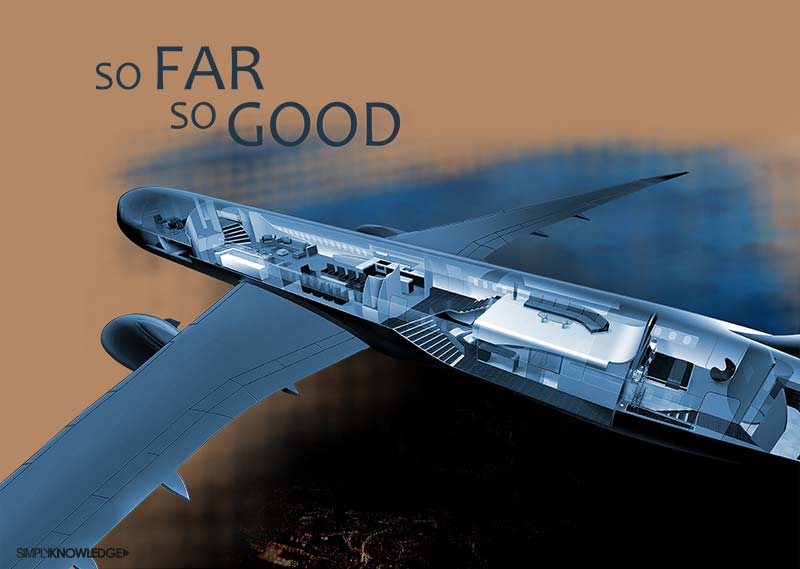
For us however, flying is easier at this time. All we have to do is go online, choose an airline, and pick our seat, book and print. Of course, we still have to go to the airport on time and board the aircraft, but then that’ll do until a way for the plane to pick us up from our roof-tops is feasible. I mean, if aircrafts can be designed to incorporate a bar lounge, a bed, couches in meeting rooms and parking for a car, then… imagination is the limit.